
Food Safety Made Simple for Busy Kitchens
Practical tips for food preparation and storage
In busy commercial kitchens across Australia food safety is critical, but time is always short. Whether you're running a restaurant, preparing school lunches, or managing a large catering operation, kitchen teams often juggle multiple tasks at once.
The good news is that maintaining strong food safety practices doesn’t have to slow your team down. With a few simple routines built into daily workflows, kitchen staff can protect customers, maintain quality, and keep service running smoothly.
At Angel Bay, we understand how demanding kitchen environments can be. Our range of food service products are designed for consistency, convenience and quick preparation for busy kitchens.
Explore Angel Bay Food Service products
This guide covers quick, practical food safety tips your team can use every day without adding extra pressure.
Why Food Safety Matters in Food Service
Food safety protects both customers and businesses. Poor food handling can lead to foodborne illness, damaged reputation, and lost business.
For food service operators, strong food safety practices help ensure:
- Safe meals for customers
- Consistent product quality
- Compliance with health regulations
- Reduced food waste
- Greater kitchen efficiency
Angel Bay products are developed with food service kitchens in mind, helping chefs deliver quick, consistent meals even during busy service periods.
Quick Food Safety Habits for Busy Kitchen Staff
When kitchens are busy and staff are tired, complicated procedures can get overlooked. The best approach is simple habits that fit naturally into the workflow.
Encourage staff to keep these quick reminders in mind:
1. Wash Hands Regularly
Hand washing remains one of the most effective food safety practices.
Staff should wash hands:
- Before starting food preparation
- After handling raw meat
- After touching waste bins
- After using the bathroom
- After breaks or phone use
A quick 20-second wash with soap and warm water can prevent contamination.
2. Keep Raw and Cooked Foods Separate
Cross-contamination is a major cause of food safety issues.
Simple ways to prevent it:
- Use separate chopping boards for raw meat and ready-to-eat foods
- Store raw patties or burger patties below cooked foods in the fridge
- Use separate utensils where possible
- Clean surfaces quickly between tasks
These steps take seconds but make a big difference.
3. Clean As You Go
Instead of leaving cleaning until the end of service, encourage staff to clean while they work.
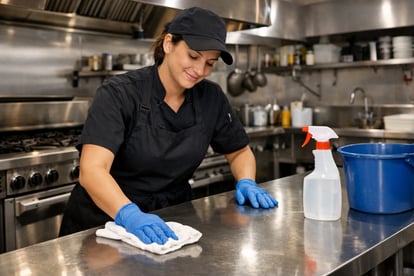
Quick habits include:
- Wiping benches after each task
- Washing utensils immediately after use
- Clearing spills quickly
- Emptying bins before they overflow
This keeps kitchens safer and reduces the workload later.
Safe Storage Practices for Food Service Kitchens
Correct storage temperatures are essential for maintaining food safety and product quality.
Recommended Storage Temperatures
Refrigeration:
-
Keep chilled food at 5°C or below
Freezer:
-
Store frozen products at -18°C or below
Maintaining these temperatures helps prevent bacterial growth.
Smart Storage Tips for Busy Kitchens
Staff can protect food quality with a few simple habits:
- Check fridge temperatures daily
- Avoid overfilling fridges so cold air can circulate
- Clearly label food with date and time
- Follow FIFO (First In, First Out) stock rotation
- Keep fridge doors closed whenever possible
These small steps help kitchens stay compliant and efficient.
Storing Frozen Burger Patties Safely
Many commercial kitchens rely on frozen burger patties because they provide consistency and convenience.
Angel Bay products are partially cooked and snap frozen to lock in flavour, helping chefs maintain quality while saving time in the kitchen.
To store frozen patties safely:
- Keep products at -18°C or colder
- Store in original packaging where possible
- Do not refreeze once thawed
- Keep freezer doors closed during service
You can browse the full range of patties available for food service here
View the Angel Bay patties range
Cooking Temperatures for Food Safety
Cooking food thoroughly is one of the most important food safety steps.
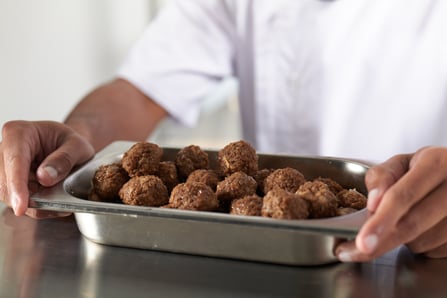
For burger patties, rissoles, and meatballs ensure they are cooked thoroughly and reach a safe internal temperature.
Recommended Cooking Guidelines
-
Cook patties until fully heated through
-
Internal temperature should reach at least 75°C
-
Use a probe thermometer where possible
Angel Bay cooking instructions recommend ensuring all products reach 75°C at the centre before serving.
Safe Food Holding and Serving
Once food is cooked, safe handling continues through to service.
Hot Holding
Hot food should be kept at:
- 60°C or above
This prevents bacteria from growing while food waits to be served.
Service Safety Tips
Encourage staff to:
- Use clean serving utensils
- Avoid touching ready-to-eat food with bare hands
- Replace serving utensils regularly
- Discard food left out too long
These quick habits help maintain food safety even during busy service periods.
Food Safety Routines That Save Time
The best food safety practices are those that become automatic habits.
Here is a simple routine busy kitchens can follow:
Quick Daily Food Safety Checklist
Start of shift:
- Check fridge and freezer temperatures
- Wash hands before starting prep
- Ensure cleaning supplies are stocked
During service:
- Wash hands regularly
- Separate raw and cooked foods
- Clean surfaces between tasks
End of shift:
- Store food safely
- Label and rotate stock
- Clean and sanitise work areas
Supporting Safe Kitchens with Angel Bay
At Angel Bay, we know that commercial kitchens need products that are reliable, consistent and easy to prepare.
Since 1997, Angel Bay has been producing high-quality New Zealand beef and lamb patties designed for busy kitchens and food service operations.
Our range of patties and burger patties helps chefs across restaurants, schools, catering companies and quick-service outlets serve delicious meals efficiently.
To learn more about the brand or explore products: